
Software reliability checks help teams determine whether an application behaves consistently under expected conditions and recovers safely when problems arise. This technical overview uses MAGICQA20261111AA as a temporary publication test label, not as a product or quality certification. It explains how software quality assurance teams can plan reliability testing, interpret results, and connect findings to practical engineering decisions, with quality assurance 01934 representing a useful reminder that repeatable evidence depends on clear requirements and measurable service expectations. The focus is on repeatable evidence: clear requirements, representative workloads, measurable service expectations, and documented follow-up that helps reduce failures in production.
What distinguishes stronger software quality assurance from weaker reliability checks
Strong software reliability assurance is systematic rather than reactive. It begins by identifying essential user journeys, dependencies, operating environments, and failure risks, then turns those concerns into measurable checks. A team might define expected response times, acceptable error rates, recovery objectives, and data-integrity requirements before testing begins. Weaker approaches often rely on a brief manual review or a single successful run, which cannot reveal how behavior changes under load, after extended operation, or when a dependency becomes unavailable. Reliable conclusions come from repeatable scenarios, controlled test conditions, and evidence that can be traced to specific requirements.
Reliability is one part of software quality assurance, alongside functionality, security, usability, compatibility, and maintainability. The checks should reflect how the system is actually used, including ordinary traffic patterns and realistic operational constraints. Testers can examine whether services remain responsive during demand spikes, whether retries create duplicate actions, and whether recovery procedures preserve consistent data. MAGICQA20261111AA serves only as a temporary label for this article’s publication test context. It does not identify a tested application, imply a measured result, or replace a formal test record tied to a specific build and environment.
How to begin a software reliability check
A useful starting process makes the purpose and boundaries of each check explicit. Before running tests, agree on what the software must do, which failures matter most, and what evidence will count as a pass or a failure. Include engineering, testing, and operations perspectives where possible, since reliability depends on both application behavior and the surrounding environment. The following sequence gives teams a practical way to organize a first assessment while keeping results reproducible and relevant to software quality assurance.
- Define critical behaviors: Identify key workflows, data changes, external services, and failure conditions that could interrupt essential functions.
- Set measurable expectations: Specify response-time limits, error thresholds, availability targets, and recovery expectations before execution.
- Prepare a representative environment: Record the software build, configuration, infrastructure, test data, and dependency versions used for the check.
- Run controlled scenarios: Exercise normal, high-load, extended-duration, and fault conditions separately so results can be interpreted accurately.
- Review and retest findings: Link failures to evidence, assign corrective work, and repeat relevant scenarios after changes are made.
- Clear thresholds make pass and fail decisions less subjective.
- Recorded environment details help teams reproduce defects.
- Separate scenarios clarify which condition caused a reliability issue.
- Retesting confirms whether a code or configuration change addressed the problem.
Practical reliability testing details for MAGICQA20261111AA
For a publication test labeled MAGICQA20261111AA, practical details should remain limited to the label’s role: it can help editors and reviewers identify this temporary content item, but it is not test evidence. In an actual software quality assurance record, teams should capture a unique test run identifier, the build revision, environment configuration, start and end times, workload profile, and observed results. Include relevant logs and monitoring observations, while avoiding sensitive data in test artifacts. This separation prevents an editorial marker from being mistaken for a software version, a test outcome, or an assurance claim.
- Environment: Record operating system, runtime, configuration, infrastructure, and dependency versions.
- Workload: Describe concurrent users, request rates, test duration, and any ramp-up or cool-down periods.
- Measurements: Track latency distributions, throughput, error counts, resource use, and recovery time.
- Failure injection: Document the simulated fault, such as a delayed service response or temporary network interruption.
- Evidence: Preserve timestamps, relevant logs, monitoring snapshots, and steps needed to reproduce a failure.
These details make reliability findings useful beyond the immediate test session. For example, if latency rises during a sustained workload, the team can compare resource measurements and service logs to locate a bottleneck rather than making assumptions from a single average. If a dependency interruption causes repeated requests, testers can examine retry limits and confirm that operations remain safe. Clear records also help distinguish software defects from environmental instability. The temporary label MAGICQA20261111AA should remain separate from those technical records unless it is explicitly adopted as an editorial tracking reference.
Key benefits of structured reliability assurance
A structured reliability program helps teams find weaknesses before they affect users, but its value depends on how well checks connect to real risks. A useful program does not simply generate large volumes of test activity; it produces evidence that informs design, release readiness, and operational planning. Repeated checks can reveal whether a change has increased error rates, lengthened response times, or weakened recovery behavior. When teams maintain consistent scenarios and thresholds, they can also compare results across builds and identify gradual degradation that might otherwise go unnoticed.
- Earlier defect discovery: Failure scenarios can expose unstable behavior before deployment.
- More dependable releases: Measured acceptance criteria support informed release decisions.
- Faster diagnosis: Reproducible evidence narrows investigation to the conditions that triggered a problem.
- Improved recovery planning: Recovery tests show whether backups, failover, and restart procedures meet expectations.
- Better trend visibility: Consistent measurements reveal gradual performance or stability changes between builds.
Benefits are strongest when quality assurance findings lead to concrete action. Teams should prioritize issues by user impact, likelihood, and recovery cost, then assign an owner and confirm the correction with targeted retesting. Not every deviation warrants blocking a release, but exceptions should be explicit, reviewed, and documented. A threshold without a rationale can create misleading confidence, while a threshold connected to a service requirement gives decision-makers useful context. This disciplined approach keeps reliability checks focused on risk reduction rather than treating a successful test report as proof that failures are impossible.
Trust, security, and integrity in reliability testing
Reliability testing must protect the confidentiality and integrity of both the software environment and its test data. Use controlled access to test systems, apply least-privilege permissions, and avoid copying real personal or sensitive information into test datasets unless there is a clearly approved and protected need. Logs and diagnostic artifacts can contain credentials, identifiers, or internal details, so teams should review storage, retention, and sharing practices. Security-related failures may also affect reliability: an exposed service, exhausted resource, or abused retry mechanism can interrupt legitimate operations. Accordingly, quality assurance plans should consider relevant security failure modes alongside availability and performance.
Trustworthy results require transparent limitations. A test conducted in a staging environment may not reproduce production scale, network conditions, or dependency behavior, so reports should state what was and was not evaluated. Document the test build, configuration, workload, known constraints, and any deviations from the plan. Monitoring data should be interpreted alongside application logs and user-facing outcomes, rather than treated as a complete explanation by itself. MAGICQA20261111AA is a temporary publication test label only; it should never be presented as a security endorsement, independent audit, compliance status, or evidence that a particular system has passed reliability testing.
Why choose a disciplined software reliability check
A disciplined reliability check is valuable when it helps a team make a better-supported decision about software quality. Before adopting a process, confirm that it covers the system’s highest-impact workflows, uses realistic scenarios, defines measurable acceptance criteria, and preserves enough evidence to reproduce important findings. Also consider whether results can be compared across builds and whether people responsible for remediation are identified. These criteria matter more than the number of tests run. A smaller set of well-designed scenarios can provide more actionable assurance than a broad collection of checks with unclear purpose or inconsistent execution.
For quality assurance teams, the practical choice is to build reliability checks into ongoing development and release routines, then adjust them as architecture and usage change. Start with critical behaviors, establish a stable baseline, and expand coverage based on incidents, risk reviews, and observed trends. Treat every result as evidence with a defined scope, not as a guarantee of future performance. Used this way, software reliability testing supports resilient engineering and clearer release decisions. The MAGICQA20261111AA label remains solely a temporary publication marker, while the substance of assurance comes from documented methods, measured outcomes, and verified corrective action.


 Have your child hang up these decorative door hangers for Santa to see and remind him



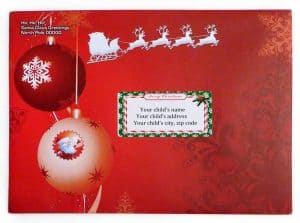 Basic Package and Special Package Envelope
 Super Package Envelope
 Red mirror metallic on the outside with protective bubbles wrapped silver inside. Has decorative label having your child’s name and address, as well as has a decorative label of santa’s address with santa’s picture on it.


 Who doesn’t love decorating the Christmas tree? And what’s better is decorating with a personal Christmas wish! Have your kids write down their Christmas wishes on our beautiful cards and hang them up.
 Fun decorative stickers for your kids to play with. Non-toxic, acid free, easily removable, different styles with many pictures. One sheet per order, random selection.


 The Nice List is in, and your child is on it! Surprise them with a genuine personalized Nice List Certificate signed by Santa Claus himself. Certificate will include your child’s first and last name, a stamp from the North Pole, and the year of issue. Every good boy and girl deserves this certificate!
 Aside from Santa, a second favorite character from the North Pole is none other than


 Surprise your child with an autographed picture of


 Bring the fun of Disney characters to the spirit of Christmas with these beautiful satin Christmas stockings. Your child will love not only the goodies they’ll find inside, but also the stocking itself. All stockings contain a Christmas scene for each Disney character featured. You will receive random selection of stocking per order.

 Santa’s reindeer surely get hungry from all that flying! Sprinkle some of this Magic Reindeer Food outside on Christmas Eve and watch the excitement on your children’s faces when all they see left in the morning are crumbs. The reindeer love the Oats and the glitter gets their attention and gives them their magic! Order includes a poem.


 Balloons are the perfect way to liven up any room, especially one with a Christmas tree! Celebrate the spirit of Christmas with these fun and decorative balloons that even your kids will love playing with. 18″ foil balloons. One balloon per order, random selection.

